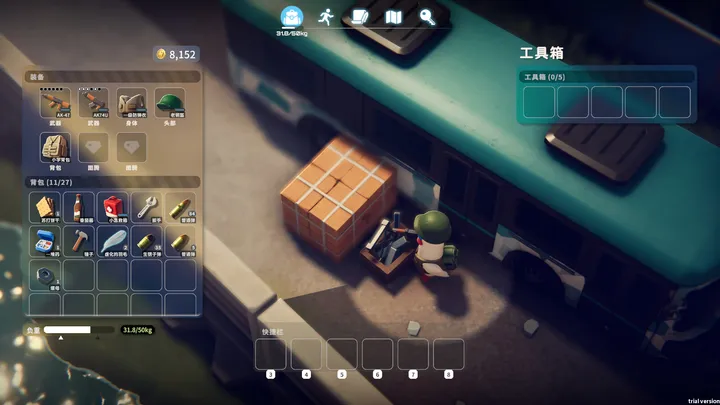







RV There Yet? is a quirky, chaotic, and unexpectedly strategic road-trip survival game where players must keep their vehicle running, manage a dysfunctional family crew, and survive a journey filled with hazards, humor, and unpredictable events. The challenge isn’t just reaching your destination—it’s doing so without letting your family fall apart, your vehicle explode, or your resources run dry somewhere in the desert. This guide breaks down how to play the game from the opening mile to the final stretch, covering mechanics, planning, upgrades, emergencies, and long-term strategies. If you want to turn frustration into mastery, this is your roadmap.
1. How to Start Your First Road Trip Successfully
The first minutes of RV There Yet? set the tone for your entire run. Choosing a route, understanding your vehicle, and learning the basic controls are essential. New players often rush into driving without understanding how easily the RV can overheat, break down, or crash into debris. Instead, start slowly, observe the environment, and get used to how the RV handles—especially how it sways, drifts, and reacts to weight shifts.
During these early moments, focus on understanding each family member’s abilities. Every character contributes differently: some help with repairs, others manage food, and some simply cause chaos. Knowing your crew determines how you’ll respond during emergencies later.
H3: Set Expectations Early
Your first trip will not be perfect. Accept mistakes and treat early game runs as learning experiments rather than victories.
H4: Create a Routine
A consistent pattern—checking fuel, managing stress, watching the map—keeps early chaos under control.

2. How to Manage Your RV and Keep It Running
Your RV is your lifeline. If it breaks down, overheats, or gets damaged beyond repair, your run ends immediately. Learning how to manage maintenance is more important than mastering driving skills. Keep an eye on the temperature gauge—running the vehicle at high heat for too long leads to engine failure, which spirals into costly repairs.
Resource management also plays a key role. Fuel is scarce, roadside shops are unpredictable, and repair kits are limited. Prioritize maintenance tools over luxuries. A well-maintained RV can survive disasters that would otherwise wipe out unprepared players.
H3: Watch Your Temperature
Keeping the engine cool is a constant task—avoid long climbs and aggressive driving.
H4: Budget for Repairs
Never spend everything at shops. Save a safety net for emergencies.
3. How to Manage Family Chaos and Stress Levels
The family members inside your RV are just as dangerous as the hazards outside. Stress levels increase from loud noises, hunger, road events, and random arguments. If stress gets too high, characters begin sabotaging the RV or making disastrous decisions. Managing stress is key to long-term success.
Understanding triggers helps prevent meltdowns. Feed characters regularly, let them rest, and rotate their tasks to avoid burnout. You will notice mood patterns—some characters crumble under pressure, while others thrive during chaos.
H3: Balance Task Assignments
Don’t let a single person handle driving or repairs for too long. Fatigue multiplies mistakes.
H4: Learn Individual Quirks
Some characters are naturally clumsy; others are emotional. Play around those weaknesses.
4. How to Navigate Routes Strategically
RV There Yet? gives players multiple route choices, each with unique risks and rewards. Some roads lead through hazardous mountains, while others wind through quiet—but resource-scarce—countryside. The route you choose changes the entire run, and choosing poorly can doom you before you’re halfway there.
Successful players plan routes based on current supplies. If you lack fuel, prioritize paths with gas stations. If morale is low, avoid chaotic zones like highways or storms. Each route contains predictable patterns—memorizing these helps players form long-term strategies.
H3: Plan for Your Weaknesses
Choose roads that compensate for your shortages, not ones that intensify them.
H4: Consult the Map Often
Recheck your route after every major event. Adjusting early prevents disaster later.

5. How to React to Random Events and Hazards
Unexpected events—falling trees, animal encounters, vehicle malfunctions, and emotional outbursts—strike constantly. These events are designed to overwhelm players, but with preparation, they become manageable. Learn to expect interruptions and always leave room for recovery.
Instead of panicking during events, break them down into priorities. If the RV is on fire, focus on extinguishing it. If a character is injured, treat them before assigning tasks. If fuel spills, reroute your journey to find a station immediately. Successful players stay calm during catastrophic events.
H3: Prioritize Survival Over Convenience
If you must choose between comfort and safety, always choose safety.
H4: Expect the Unexpected
The game rewards players who stay mentally flexible, not those who memorize every detail.
6. How to Upgrade the RV and Unlock New Tools
Upgrades transform a fragile vehicle into a formidable machine capable of surviving harsh environments. Prioritize upgrades that reduce engine heat, improve mileage, or strengthen armor. Some upgrades allow characters to rest while the vehicle moves; others enhance carrying capacity.
However, upgrades require careful budgeting. Overinvesting early can leave you bankrupt during emergencies. Consider long-term value—upgrades that reduce fuel consumption save more resources over the journey than cosmetic or minor improvements.
H3: Pick High-Impact Upgrades First
Focus on fuel efficiency, cooling systems, and storage expansions.
H4: Avoid Overcommitting
Not every upgrade is needed immediately—save for the ones that truly matter.
7. How to Handle Environmental Challenges
Every region introduces new environmental hazards: desert heat overheats the engine, snowy terrains reduce traction, and forests create visibility issues. Understanding these biome-specific dangers makes navigation far easier.
Learn how weather affects your RV. Rain increases the chance of losing control; wind pushes the RV into obstacles; heat accelerates engine stress. Adapt driving style to each biome—slow down in storms, take breaks in deserts, and remain cautious in forests.
H3: Slow is Safe
Speed kills more runs than anything else. Conservative driving preserves resources.
H4: Observe Weather Patterns
Some weather cycles repeat—plan around them when possible.
8. How to Build Efficient Resource Cycles
To survive long-term trips, you need stable resource management: food, water, fuel, parts, and money. Efficient cycles require predictability—knowing what you gain and what you lose each day. Aim to balance consumption with acquisition.
Some players hoard resources, while others spend too freely. The ideal strategy lies between. Buy essentials during discounts, scavenge regularly, and avoid unnecessary risks. Keep track of what each family member consumes and adjust accordingly.
H3: Maintain a Resource Buffer
Always keep extra fuel, spare parts, and food.
H4: Use Scavenging Wisely
Some areas offer high-value scavenging spots—use them to restock efficiently.

9. How to Prepare for Late-Game Challenges
Near the end of the journey, hazards intensify, characters are exhausted, and the RV is fragile. Late-game challenges test your mastery of every skill learned so far. You will face tougher storms, more dangerous highways, and increased mechanical failures.
Preparation is key. Enter the late game with upgraded systems, high morale, and surplus resources. Characters should be well-rested, and the RV should be in peak condition. Avoid high-risk routes unless your build can handle them.
H3: Enter the Endgame Fully Stocked
Don’t gamble with low supplies—refill before the final stretch.
H4: Expect Back-to-Back Events
Late-game chaos comes rapidly—manage stress and pace your decisions.
10. How to Win Consistently and Master Advanced Techniques
Mastering RV There Yet? involves refining your instincts. You’ll learn when to brake, when to accelerate, at what point an argument will erupt, and how to prevent cascading disasters. Advanced techniques such as micro-steering, predictive repairs, and multitask rotation make complex situations easier.
High-level players adapt instantly. They treat every journey as a fluid puzzle with evolving rules. Once you understand the game’s rhythm, you’ll stop reacting emotionally and instead make calm strategic decisions.
H3: Embrace Adaptation
Every run is different. Flexibility becomes your strongest skill.
H4: Review Your Failures
Study what caused each loss—patterns will emerge.
Conclusion
RV There Yet? is far more than a simple road-trip game—it’s a complex survival simulator filled with chaotic moments, mechanical challenges, and emotional storylines. Mastering it requires understanding systems, managing your family, optimizing your RV, and staying calm during unpredictable disasters. With patience and strategy, even the toughest journeys can become memorable successes. The more you play, the more the road feels like home.