The Hidden Depths: A Chronological Analysis of Environmental Storytelling and Subterranean Lore in Avatar World
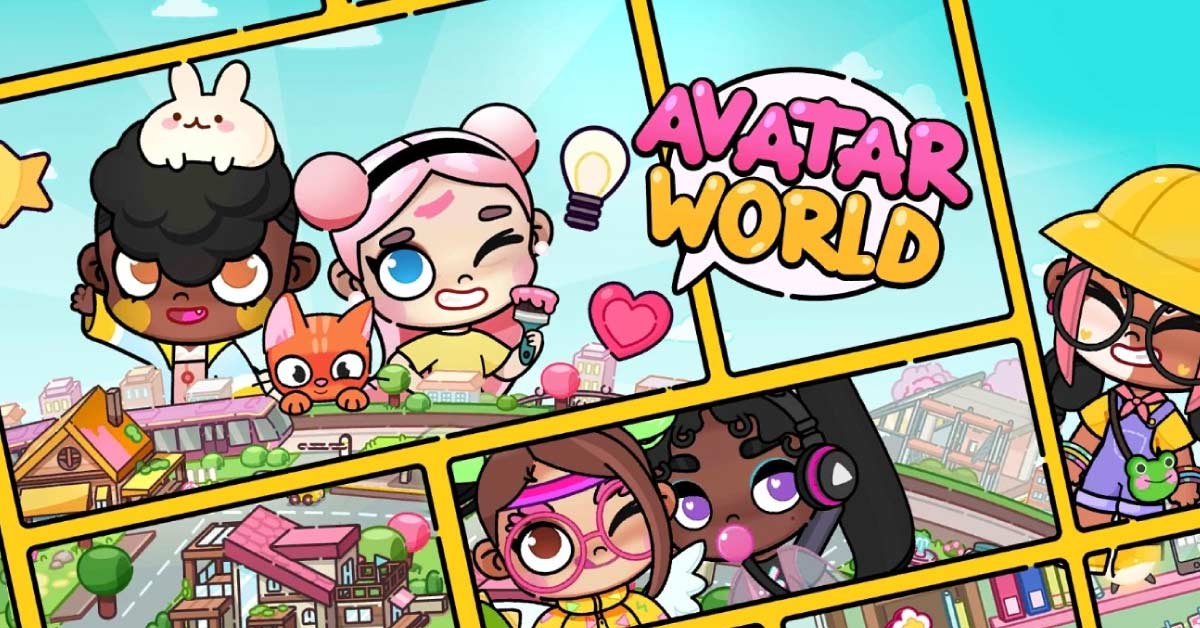
When examining the landscape of contemporary mobile simulation games designed for younger audiences, titles like Pazu Games’ Avatar World are often superficially categorized as simple, digital dollhouses. At first glance, the game presents a vibrant, pastel-colored world where players can customize characters, decorate homes, and engage in unstructured roleplay. However, a deeper, more analytical look at the game's update cycle reveals a highly sophisticated, hidden narrative layer. This article explores a highly specific and captivating issue within the game: the chronological evolution of the "Hacker Bunker" and underground lore. This multi-layered, interactive puzzle has transformed the title from a standard dress-up simulator into a complex, community-driven mystery game. By tracking the implementation of these hidden environments over time, we can observe a masterclass in environmental storytelling, misdirection, and interactive game design.
Establishing the Baseline of Normalcy: The Early Releases
When Avatar World initially launched, the developers meticulously established a baseline of complete normalcy. The early environments—consisting primarily of a school, a hair salon, and basic residential houses—were devoid of any sinister or mysterious undertones. This was a calculated design choice. By acclimatizing the player base to a safe, predictable environment filled with straightforward interactions (such as cooking food, changing clothes, and playing with pets), the developers created a cognitive comfort zone. The gameplay loop was entirely player-driven, relying on the user’s imagination rather than any overarching developer-created narrative.
This extended period of standard life-simulation updates was crucial for the psychological impact of later patches. If a game introduces complex mysteries immediately, they become the expected norm. However, by waiting months before introducing the first anomalies, Pazu Games ensured that any deviation from the pastel-colored reality would be highly jarring and immediately noticeable to their dedicated player base. The contrast between the bright overworld and the impending dark lore was fundamentally reliant on this initial period of mundane, everyday digital life.
During this era, community discussions centered almost exclusively on aesthetic updates, character customization options, and requests for new clothing items. There was no overarching lore to discuss, no hidden mechanics to decode, and no reason for players to suspect that the developers were quietly laying the groundwork for a massive, interconnected puzzle. The surface-level play served as the perfect camouflage for the complex architectural and narrative shifts that were secretly in development.
The First Anomalies: The Hospital Update and Hidden Compartments
The first genuine paradigm shift in Avatar World occurred with the release of the Hospital update. On the surface, the hospital functioned exactly as expected, providing medical-themed clothing, beds, and interactive medical equipment for roleplay. However, observant players quickly discovered that this building possessed an unprecedented feature: complex hidden compartments that required specific, logical actions to unlock. Unlike previous secret areas, which typically only required tapping a loose brick or opening a disguised door, the hospital secrets demanded sequential problem-solving and environmental awareness.
Behind X-ray machines and tucked away inside locked filing cabinets, players began finding strange, out-of-place artifacts that did not fit the medical theme. These included encrypted keycards, strange metallic components, and documents containing bizarre, unrecognizable symbols. This was a radical departure from the game’s established interaction model. It forced players to transition from passive roleplayers to active investigators, changing the way they interacted with every object in the game world.
The Shift in Interaction Design
This update fundamentally altered the player-game relationship. No longer was every item just a prop; items were now potential keys or clues.
Cognitive Engagement for Young Players
By introducing these sequential puzzles, the developers challenged their young audience to utilize working memory, spatial reasoning, and pattern recognition. Players had to remember where they found a specific keycard and deduce which seemingly innocuous wall panel it might open, fostering a new level of cognitive engagement within the simulation genre.
The Subway Station: Expanding the Navigable Underworld
Building upon the success of the hospital's hidden elements, the developers released the Subway Station update, which served as the central hub for the game's burgeoning underground lore. Visually, the subway station was a stark contrast to everything released prior. The lighting was noticeably dimmer, the color palette shifted from bright pastels to muted grays and neon accents, and the ambient audio featured industrial hums rather than upbeat background music. This environmental shift signaled to the player that they were stepping out of the safe overworld and into a narrative space designed for discovery.
The subway station was not just a new location; it was a physical and metaphorical crossroad. It featured multiple locked doors, inaccessible train platforms, and deactivated terminals that practically begged to be interacted with. However, unlike previous updates, the tools required to unlock these areas were not entirely contained within the subway itself. This forced players to traverse back to older locations, creating an interconnected web of puzzles that spanned the entire game map.
This update solidified the existence of a continuous, developer-authored storyline. The presence of maintenance tunnels and heavy security doors implied that a sophisticated, unseen entity was operating beneath the feet of the regular avatars. The community response was explosive, with players mapping out the subway system and theorizing about what lay behind the heavily fortified, locked blast doors that dominated the station's lower levels.
Uncovering the Janitor’s Closet: A Masterclass in Misdirection
One of the most engaging specific puzzles introduced during the subway era was the "Janitor's Closet" sequence. To the casual observer, the closet appeared to be a static background element. However, it was actually the first major gateway into the game's deep lore. Accessing this room required a complex sequence of actions that served as a masterclass in game design misdirection, demanding that players think outside the immediate geographical location of the puzzle.
To breach the closet, players had to engage in a multi-step scavenger hunt that crossed several different game updates. The process required players to synthesize clues scattered across the game world and combine items in ways that were not explicitly taught by the game's UI. The required items were meticulously hidden to prevent accidental discovery, ensuring that only dedicated players would crack the code.
- The Blue Access Card: Hidden behind a poster in the school update, requiring a specific tool to pry off the wall.
- The UV Flashlight: Located inside a seemingly normal backpack in the residential district, used to reveal invisible ink.
- The Crowbar: Found buried in a sandbox at the construction site, requiring a shovel to excavate.
- The Fuses: Three distinct electrical fuses scattered across the hospital and mall, necessary to power the closet's electronic keypad.
The Hacker’s Lair Reveal: The Narrative Paradigm Shift
The culmination of the subway puzzle sequence was the eventual unlocking of the Hacker’s Lair, a massive, multi-room underground bunker that completely shattered the game's previously innocent facade. Entering the lair revealed a high-tech surveillance hub filled with massive server racks, multiple computer monitors, and chaotic corkboards connected with red string. This environment explicitly confirmed what players had begun to suspect: the avatars of the overworld were being actively monitored by an unknown, technologically advanced faction.
The density of the lore within this single room was staggering. The monitors displayed live, corrupted feeds of the overworld locations—the school, the hospital, the mall—indicating that the "safe" zones were actually under surveillance. The room was littered with blueprints of the city, suggesting that the hackers had intimate knowledge of the town's infrastructure or perhaps even a hand in its creation. This narrative revelation transformed the entire context of the game.
By introducing a voyeuristic element, the developers added a thrilling layer of mild, age-appropriate suspense. Players began to view the overworld differently, searching for hidden cameras or microphones in standard residential houses. The Hacker's Lair proved that Avatar World was capable of sustaining a complex, serialized mystery, elevating it above its competitors in the digital dollhouse market by providing a concrete, ongoing storyline to follow.
Cryptography for the Community: Decoding the In-Game Symbols
Perhaps the most ambitious aspect of the Hacker's Lair update was the introduction of a unique, in-game cipher. The walls, computer screens, and scattered documents inside the bunker were covered in a cryptic, alien-like text. Rather than providing an in-game translation tool, the developers left the decoding entirely up to the player base. This sparked a massive, collaborative effort across social media platforms, as players shared screenshots, compared symbols, and slowly began to piece together the alphabet.
This reliance on crowdsourced cryptography is a fascinating phenomenon in a game targeted at children and young teens. It encouraged out-of-game collaboration, turning solitary mobile gameplay into a shared community event. As the community translated the text, they uncovered cryptic warnings, references to future updates, and lore snippets about the identity of the hackers. The messages often hinted at an impending conflict or a deeper secret buried even further beneath the city.
The Educational Value of Gamified Cryptography
By embedding a functional cipher into the environment, the game inadvertently taught basic cryptographic principles, such as frequency analysis and substitution ciphers.
Community Building Through Shared Challenge
The difficulty of the task ensured that no single player could easily solve it alone. This fostered a sense of camaraderie and shared achievement within the game's fandom, driving immense organic engagement and prolonged retention rates between major content updates.
The Mansion Update: Tying High Society to the Underground
Just as the community became fully absorbed in the grimy, technological underworld, the developers threw a narrative curveball by releasing the Luxury Mansion update. On the surface, this update appeared to be a return to the game's roots: a massive, opulent house filled with expensive furniture, designer clothes, and swimming pools. However, dedicated lore hunters quickly discovered that the mansion was intrinsically linked to the Hacker's Lair.
Hidden behind a false bookcase in the mansion's lavish library was a pristine, high-tech elevator that descended directly into a new section of the subterranean network. This revelation forced players to re-evaluate the game's power dynamics. The hackers were not just underground dwellers; they were financed or controlled by the elite of the overworld. The contrast between the pristine wealth above and the gritty surveillance tech below added incredible depth to the game's implicit storytelling.
This connection implied a narrative of corporate espionage, secret societies, or a "benefactor" figure who was funding the surveillance. The mansion was littered with subtle clues—documents bearing the same cryptic symbols found in the bunker, and specialized technology disguised as luxury decor. This masterfully tied the traditional "dollhouse" gameplay (decorating a mansion) directly into the overarching puzzle narrative, satisfying both casual players and hardcore lore enthusiasts simultaneously.
The Train Derailment Clues: Environmental Storytelling Peaks
The progression of the subterranean narrative reached a dramatic peak with the introduction of the Train Derailment environment within the expanded subway tunnels. Unlike previous areas which were functional and intact, this area depicted a catastrophic event. Smashed subway cars, flickering emergency lights, and scattered debris created an atmosphere of abandonment and urgency. This was environmental storytelling at its finest, communicating a narrative entirely through the physical state of the virtual world without a single line of dialogue.
Players had to navigate the wreckage, using previously acquired tools (like the crowbar and UV light) to pry open jammed doors and reveal hidden messages written in the grime on the windows. The mechanics here shifted from simple exploration to forensic scavenging. Among the debris, players found pieces of a torn photograph, which, when assembled, revealed a blurry image of figures involved in the game's overarching conspiracy.
The lighting and audio design in this section were notably advanced for a mobile title. The persistent sound of sparking wires and dripping water created a tense, immersive experience. By presenting a ruined environment, the developers suggested that the underground network was not a static, safe place, but a dynamic world where unseen, potentially dangerous events were actively occurring while the player was away.
The Introduction of Mysterious Figures
For a long time, the lore of Avatar World was strictly environmental; players interacted with the remnants and tools of unseen characters. This changed dramatically when the developers finally introduced the "Mysterious Figures"—NPCs dressed in black suits and tactical gear who began appearing in the background of newly unlocked underground areas. Unlike regular avatars, these figures could not be dressed up or customized. They possessed their own specific patrol routes and animations, standing out starkly against the game's usual sandbox mechanics.
The introduction of these figures shifted the game's genre slightly, introducing stealth-lite elements. If a player’s avatar got too close to these agents in certain restricted zones, the agents would react, blocking pathways or forcing the player out of the area. This was the first time the game world actively pushed back against the player, creating a sense of boundary and rule-sets within the narrative spaces.
The community exploded with theories regarding the identities of these agents. Were they the hackers themselves? Were they a corporate security force trying to stop the hackers? Or were they agents of the mansion's mysterious owner? By providing moving, reactive characters, the developers injected a sense of urgency and life into the underground mystery, making the lore feel less like an archaeological dig and more like an unfolding, real-time thriller.
The Current State and Future Implications of the Subterranean Narrative
As of the most recent updates, the subterranean narrative of Avatar World remains an open, evolving mystery. The developers have successfully maintained a delicate balancing act, providing just enough answers to reward dedicated players while introducing new questions to sustain long-term interest. The intricate web of the Hacker's Lair, the Mansion, and the ruined subway tunnels now forms a massive, interconnected puzzle box that stands in stark contrast to the simple aesthetic of the game.
The decision to embed this dark, complex lore into a children's life-simulation game is a stroke of design genius. It differentiates Avatar World from heavy-hitting competitors like Toca Life World by offering a dual-layered experience. Younger or more casual players can entirely ignore the lore, happily decorating houses and dressing up characters in the bright overworld. Meanwhile, older or more analytical players are provided with a deep, intellectually stimulating alternate reality game embedded within the very same app.
Moving forward, the implications for this style of game design are vast. Avatar World has proven that mobile audiences, regardless of age, are capable of and hungry for complex, serialized, non-linear storytelling. As the developers continue to expand the map, the community waits with bated breath, armed with UV flashlights and translated cipher keys, ready to descend once again into the hidden depths beneath the pastel-colored streets.
Avatar World's evolution from a simple digital dollhouse to a complex puzzle game through the Subway and Hacker updates showcases masterful environmental storytelling.