 download9game.com
Five Strangers, Thirteen Rounds: What VALORANT Is Really Asking You to Trust
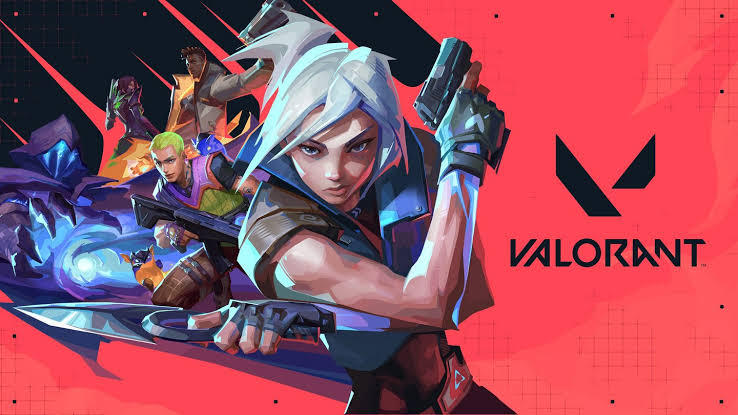
At some point in nearly every ranked match of VALORANT, a voice you have never heard before says something short. “One A long.” “Heard Sage down B.” “Rotating, they’re stacked.” It is a handful of words, delivered by someone whose name you read for the first time ninety seconds ago, and you have about two seconds to decide whether to believe them. If you believe them and they are right, you rotate across the map, catch the enemy team out of position, and win a round that would have been lost. If you believe them and they are wrong, you leave a site undefended and watch the spike go down behind you. If you refuse to believe them, you stay where you are, and sometimes that is the smartest play in the game and sometimes it is the mistake that loses it. Every round of VALORANT contains a dozen of these small acts of trust, and most players never notice they are making them.
That, more than aiming, more than agents, more than the economy or the maps, is what this game is about. Riot Games’ tactical shooter launched in 2020 as a five-versus-five contest in which one team attacks, planting a bomb called the spike, and the other defends, and the first side to win thirteen rounds takes the match. It combines the precision gunplay of classic tactical shooters with a cast of characters, called agents, whose abilities add layers of utility, deception, and area control. The game now offers around thirty agents, with the newest, Hush, arriving in Patch 13.09 at the end of October 2026, along with a stream of new weapons, modes, and systems. It has become one of the dominant esports of its generation, and Champions 2026, held in Shanghai, drew the world’s best teams to compete for the title.
But beneath the competitive spectacle sits a quieter design problem, one that Riot has been trying to solve for years: how do you turn five strangers who have never met into something that functions as a team? The answer, as it has evolved, says a lot about what the game really values.
A Genre Built on Information
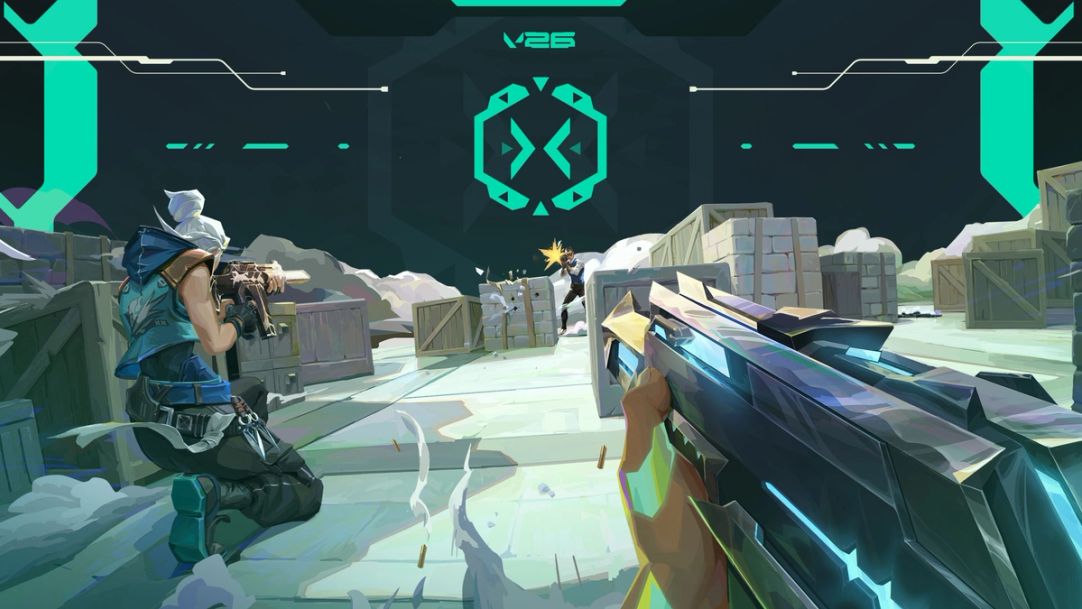
To understand why trust matters so much, it helps to understand how little each player can see. A match of VALORANT is played on a compact map with narrow corridors, hidden angles, and multiple routes to each objective. At any moment, you can see only a sliver of the battlefield, and the rest is a matter of inference, sound, and communication. Where is the enemy? Which site are they heading toward? How many are left? Nobody on the team has the whole picture, and the picture is assembled from fragments that each player contributes.
This is the structural reason communication matters. In a game of imperfect information, the team that shares its fragments most effectively sees the most. A lone player with excellent reflexes can win a duel, but a team with excellent information can win the round before a duel is necessary. A callout, a short and accurate piece of information, is therefore worth more than almost any mechanical skill, and the act of delivering one, and of believing one, is the core social transaction of the game.
It is also what makes the game so tense. When you hear a footstep behind you and nobody has said anything, you have to decide whether it is an enemy, a teammate, or a trick. When a teammate calls a location and you cannot confirm it yourself, you have to weigh the odds. Every decision is shaded by uncertainty, and trust is the tool you use to cut through it.
The Agent as a Promise
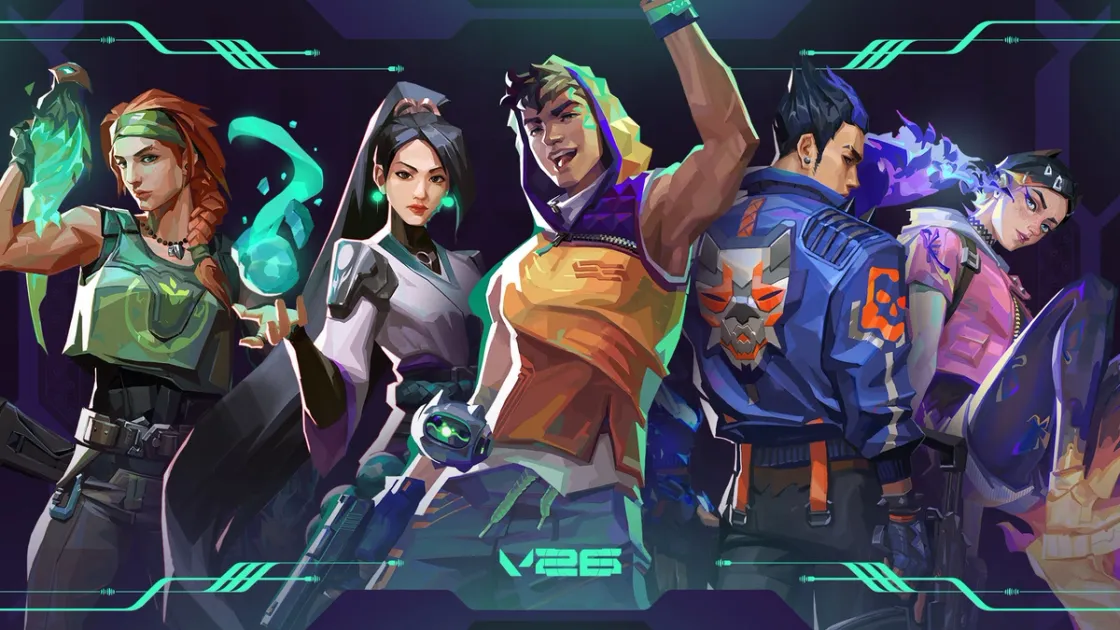
The agent system adds a second layer to this dynamic. Each character has a role, whether it is a Duelist who takes fights and creates openings, an Initiator who gathers information and sets up attacks, a Controller who shapes the map with smokes and barriers, or a Sentinel who holds ground and watches flanks. Choosing an agent is not just a matter of preference. It is a promise to your team about what you will do.
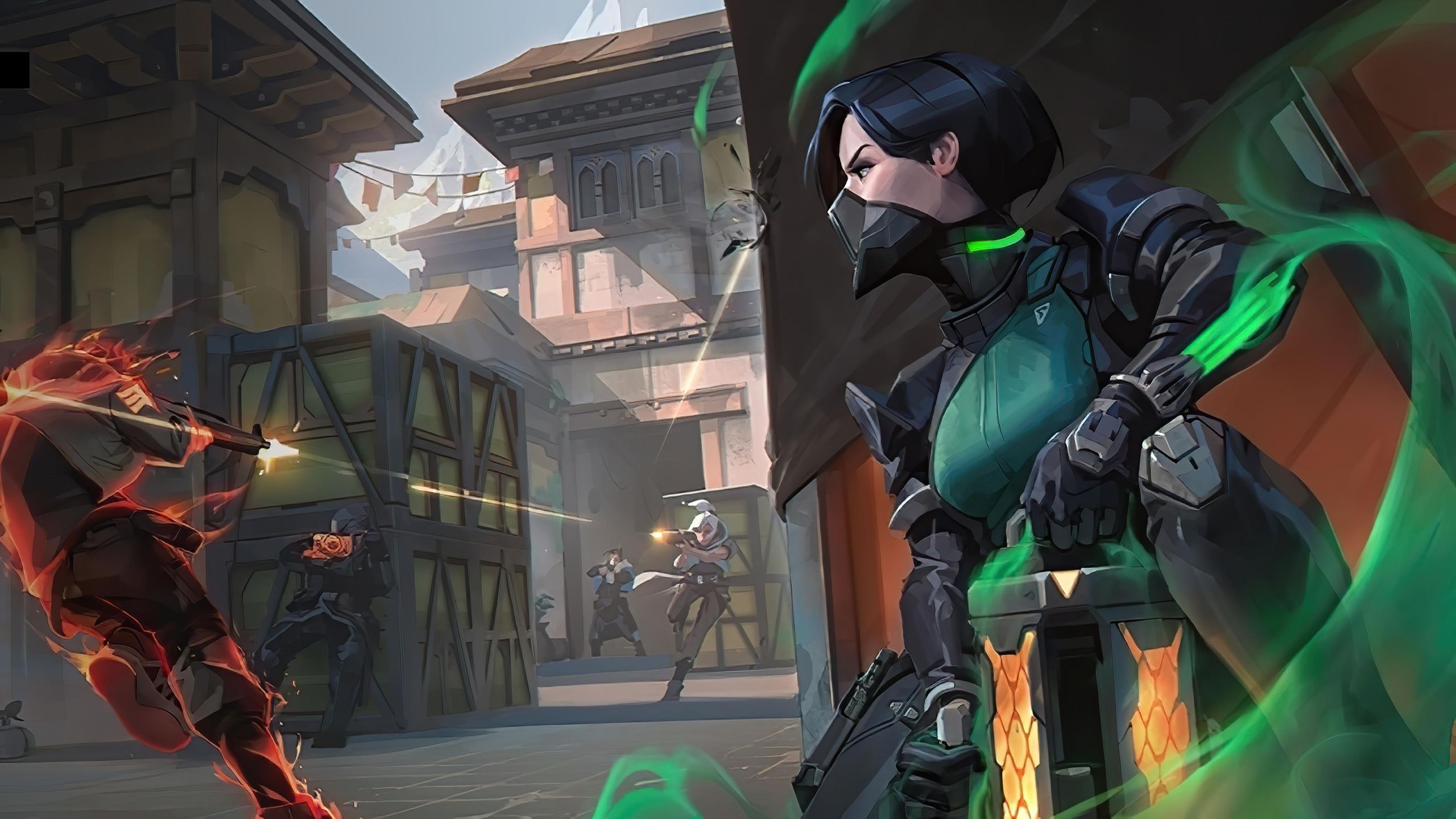
A teammate who picks a Controller is telling the others that they will provide cover. A player who selects an Initiator is promising to gather the intelligence the team needs. A Sentinel who locks in is implying that the flanks will be watched. When everyone fulfills their role, the team functions like a well-tuned machine. When someone fails to deliver, the whole structure wobbles, and the frustration that follows is often less about the lost round than about the broken promise.
That is why agent selection is such a charged moment in ranked play. The game’s culture is full of arguments about who should play what, and the intensity of those arguments reflects the stakes. A mismatched composition is not just a tactical weakness. It is a failure of coordination before the match begins, and teams that cannot agree on roles often struggle to agree on anything else.
The newest agent additions continue this pattern. Each new character is designed to fill a particular need, and the community’s reaction tends to focus on how that character will change the dynamic of the team. A Controller like Miks, introduced in Act 2 of the 2026 season, shapes how teams think about smoke coverage and space. A Duelist like Hush, who arrived in October’s patch, shifts the expectations around entry and aggression. Every new agent is, in effect, a new promise players can make to each other.
A Game That Is Always Changing
One of the quieter strengths of VALORANT is how consistently it evolves. Riot ships patches on a steady cadence, adding agents, weapons, maps, and systems, and the 2026 season has been busy even by the game’s standards. Patch 12.00 opened the year with a rework of the agent Breeze, a new pistol, replay support for custom games, and a set of changes to matchmaking and player behavior systems. Later patches introduced a new Controller, additional modes, and the Warden rifle, a new weapon that arrived in Patch 13.06 alongside an experimental mode called Gauntlet: Glitched, in which randomized abilities and glitches change how matches unfold.
The map pool is in constant motion, too. Patch 13.08 brought a new Map Rating system, returned Bind to the rotation, and removed Ascent, a reshuffling that forces teams to relearn certain spaces and rethink strategies. Each change ripples through the community, as players adapt their habits, share new tactics, and argue about what works.
For a game built on trust, this churn is double-edged. On one hand, it keeps the experience fresh and prevents the meta from calcifying. On the other, it means that the shared knowledge teams rely on is perpetually being rewritten, and the assumptions you made last week about a map or an agent may no longer hold. Trusting a teammate’s callout is easier when you both know the map. When the map changes, so does the foundation of that trust.
Riot’s Long Argument With Toxicity
It would be dishonest to discuss trust in VALORANT without acknowledging the other side of it. Five strangers do not always cooperate. Ranked matches can be sources of frustration, and the game’s competitive culture has a reputation for harsh words, blame, and the occasional abandoned match. Riot has spent years trying to address this, and the measures give a window into how seriously it takes the problem.
The company has issued warnings and penalties for disruptive behavior, with reports in recent years suggesting that hundreds of thousands of players have received behavior-related notices. It has built systems for reporting, muting, and penalizing players who abuse the game’s communication channels, and it has rolled out changes to matchmaking and ranked structure intended to reduce the incentives for toxicity. These efforts are imperfect, but they reflect a recognition that a tactical shooter lives or dies by the quality of its social environment.
The newer systems point in a similar direction. Patch 13.06 introduced Agent Mastery, a progression system that replaces the older Agent Gear and rewards both time spent playing a character and in-game performance. Players earn Act Levels, Lifetime Levels, and Mastery Points, and can customize Agent IDs to show off their dedication. A new competitive flex, a way to display ranked achievements, will arrive with the 2027 season. These features may look like cosmetic progression, but they also nudge players toward something the game badly needs: investment in a role. A player who has put hundreds of hours into a character is more likely to play it well, and more likely to feel responsible for the team’s success.
There is a subtle psychology here. When players commit to an agent, they develop a stake in that character’s performance, and that stake tends to translate into more thoughtful play. Mastery is, in effect, a way of making people care about doing their job well, and caring is the raw material of trust.
What Trust Looks Like in Practice
For all this talk of systems and design, the experience of trust in VALORANT is ultimately intimate and concrete. It looks like a player who holds a corner without being asked because they know the team needs the time. It looks like a Sentinel who calls a flank before it happens. It looks like a teammate who trades a kill by following up immediately, a small act of faith that someone will be there to support them. It looks like a player who says “my bad” after a mistake and moves on, which lets the team recover instead of spiraling.
Here are some of the habits that build trust in a match:
- Short, accurate callouts. A few precise words, such as location and number, are more useful than long descriptions, and accuracy builds credibility over the course of a match.
- Following up. Staying close enough to trade a kill tells your teammates that you will not leave them isolated.
- Admitting mistakes. A brief acknowledgment keeps tension low and lets the team refocus.
- Playing your role reliably. Doing the job the agent is meant to do makes you predictable in the best sense.
- Muting the noise. Ignoring abuse and focusing on the next round protects both your own performance and the team’s cohesion.
These behaviors sound simple, and they are, but the difficulty lies in doing them consistently when tempers fray and the scoreboard looks bad. The players who climb the ranked ladder fastest are often not the ones with the best aim but the ones who make their teammates play better, and they do it by being the kind of player others are willing to believe.
Where the Design Strains
The emphasis on teamwork also exposes the game’s pressure points. The first is the reliance on random matchmaking. Because most players queue with strangers, the quality of any given match depends heavily on chance, and a team with poor communication can lose to a team of lesser mechanical skill. Riot has experimented with systems to improve matchmaking and ranked integrity, including features borrowed from other competitive games, but the fundamental tension between fairness and randomness remains.
The second is the burden of the learning curve. A new player has to absorb a great deal: the economy, the maps, the agents, the weapons, the callout language, and the unspoken norms of the community. That can be intimidating, and the game’s tendency toward rapid change adds to the burden. The Agent Mastery system and other progression layers may help give newcomers a sense of direction, but the entry cost remains high.
The third is the intensity of the competitive environment. VALORANT’s ranked ladder can feel unforgiving, and the emotional swings of a loss streak are well known. A game that depends on trust is also a game that can wear it down, and Riot’s ongoing work on behavior and match quality reflects how hard it is to keep that balance.
A fourth is the risk of over-systemization. As the game adds layers of progression, cosmetics, and metagame systems, there is always a danger that the core pleasure, a tense and elegant tactical contest, gets buried under features. The studio has so far managed to keep the focus on the match itself, but the temptation to add more is perennial.
Who Should Play It, and How
A few practical thoughts for anyone considering the game or returning to it:
- If you love tactical shooters, this is a polished, deep, and demanding example of the genre, with a strong competitive scene to follow.
- If you play solo, invest in your communication. A reliable voice and clear callouts will improve your results more than any aim trainer.
- If you are new, start in unrated modes, learn a small pool of agents, and focus on understanding the maps before worrying about rank.
- If you want to improve, watch how professional teams communicate and coordinate. The tactics matter, but so does the discipline.
- If you are frustrated, take breaks. The game rewards a clear head, and tilt is the quickest way to lose.
What You Are Really Playing
It is tempting to describe VALORANT as a game about shooting, because that is what it looks like. The best players do have extraordinary aim, and the highlight reels are full of impossible flicks and clutch plays. But the more you play, the more you realize that the shooting is the visible tip of something much larger. The real game is the conversation: the callouts, the rotations, the quiet agreements about who will do what, and the thousand small decisions to believe or doubt a voice you have never heard before.
That conversation is what makes a round feel like a story, and it is why the most memorable moments in the game are rarely solo achievements. They are the coordinated executes, the perfectly timed retakes, the five-person defenses that hold against the odds. Each one is built on trust, extended to strangers, repaid by performance, and renewed in the next round.
Thirteen rounds is not very long. It is just enough time for five people who did not know each other to become a team, or to fail at it. The next time you load into a match and hear that short, unfamiliar voice say something quick and urgent, take a moment to consider the strange transaction taking place. Someone is offering you a piece of the picture. What you do with it, believe it, test it, or ignore it, may be the most important decision of the round.